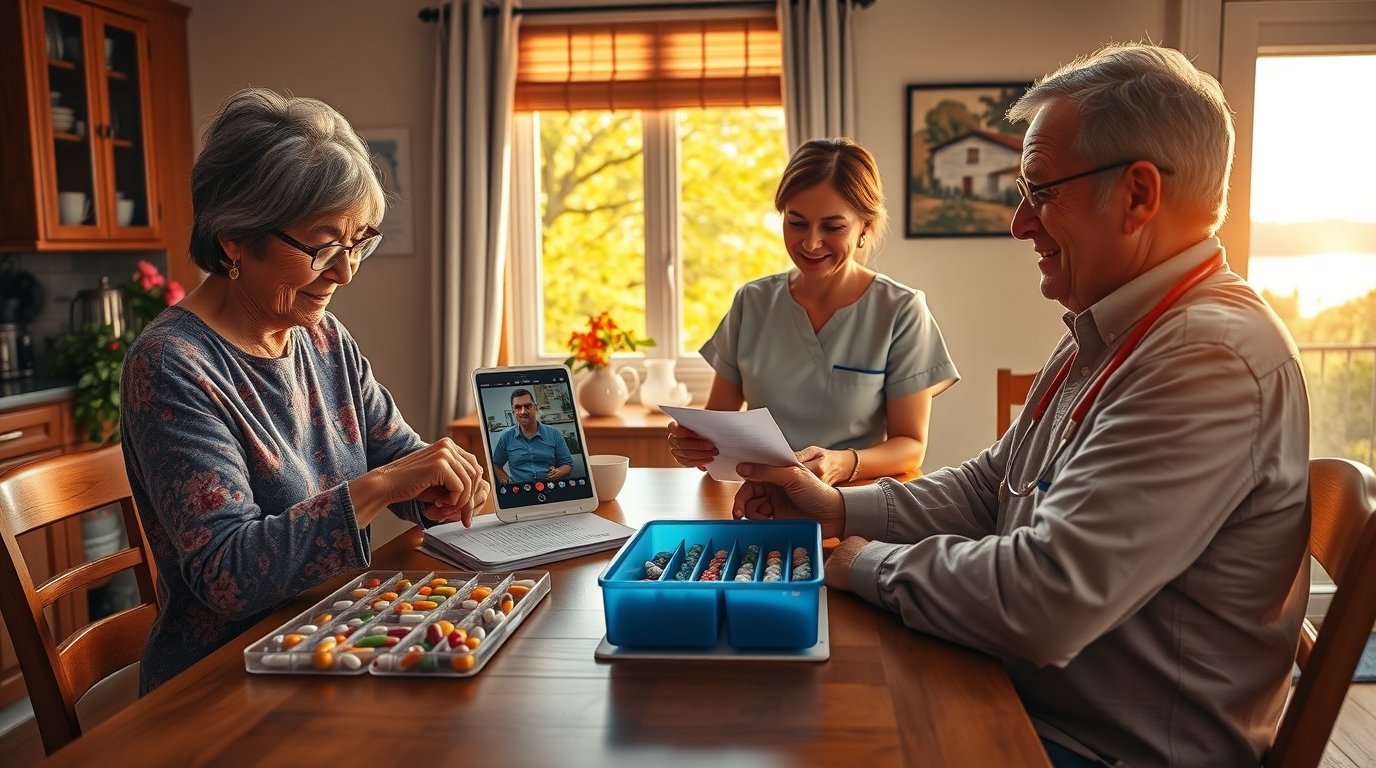
In the quiet comfort of a Maryland home—perhaps overlooking the serene Chesapeake Bay or nestled in Baltimore’s historic rowhouses—managing medications for elderly loved ones can feel like a full-time job. With polypharmacy safety at stake, where seniors often juggle 5 or more prescriptions daily, the risks are real: from dizzy spells leading to falls to dangerous drug interactions that land 750 older adults in the hospital each day nationwide. For Maryland families, home medication management seniors isn’t just routine—it’s a safeguard against the silent epidemic affecting 44% of those over 65 who use multiple meds.
At Minasville Healthcare Services, our licensed nurses specialize in home medication management seniors, turning complexity into confidence with tools like pill organizers and telehealth reviews. This practical guide delivers expert-backed polypharmacy safety tips, drawn from sources like Johns Hopkins and the NCBI, to empower you. Whether addressing arthritis painkillers or blood pressure pills, these strategies drive shares for their actionable wisdom—targeting “tips” searches where families seek reliable relief. Let’s simplify home medication management seniors and prioritize safety today.

Polypharmacy—defined as concurrent use of five or more medications—has nearly doubled among U.S. seniors over the past two decades, with 42% of adults 65+ reporting it between 2017-2020. In Maryland, where chronic conditions like hypertension and diabetes prevail, this trend amplifies vulnerabilities in home environments. Without oversight, interactions spike: one med might amplify another’s sedative effects, causing drowsiness and a 50% higher fall risk, per Johns Hopkins.
The dangers extend beyond slips—polypharmacy safety concerns include cognitive fog (up to 20% increased dementia risk), organ strain, and even mortality rates 30% higher in polypharmacy patients. Hospitalizations for adverse reactions? A staggering 80% in psychiatric cases among elders. At home, factors like dim lighting or memory lapses compound errors, turning a simple routine into a hazard. Yet, proactive home medication management seniors can slash these risks by 40%, according to Amedisys home health strategies. Knowledge is your first defense: Review prescriptions quarterly with a doctor to deprescribe unneeded ones, a key NCBI-recommended tactic.
Maryland’s aging population—projected to hit 1.5 million by 2030—relies on home-based care for independence. But polypharmacy safety demands vigilance: Seniors metabolize drugs slower, heightening side effects like dizziness or depression. In cozy settings, distractions abound—grandkids visiting, TV blaring—making adherence tricky. Effective home medication management seniors fosters autonomy while preventing crises, aligning with state programs like Medicaid’s Community First Choice for med support.
Expert backing underscores urgency: UCI Health warns of common culprits like opioids and benzodiazepines fueling falls, while Sinai Health stresses organized systems. Sharing these tips? They resonate emotionally, boosting virality as families forward “must-know” advice.
Practicality reigns here—drawn from A Place at Home, Healthy U Clinics, and Right at Home—these polypharmacy safety strategies are simple, shareable, and science-supported. Implement one weekly for lasting habits.
Compile every prescription, OTC, supplement, and vitamin into one document—dosage, purpose, prescriber. Share it at appointments; apps like Medisafe digitize this. Why? It flags interactions early, reducing errors by 25%. For Maryland seniors, laminate a copy for the fridge—quick access during ER calls.
Sort meds into daily/weekly boxes (AM/PM/Noon/Bedtime). Affordable options from Walmart or pharmacies cut confusion. LifeWorx notes this boosts adherence 50%. Pro tip: Color-code for conditions (red for heart, blue for pain) to enhance polypharmacy safety.
Set phone alarms or use apps like PillPack (Amazon) for auto-sorted deliveries. Sinai Health endorses this for visual/auditory cues, vital for memory-challenged elders. Integrate voice assistants: “Alexa, time for pills?”—hands-free for arthritic hands.
Centralize at a local like CVS or Giant Eagle; pharmacists review for duplicates. AgeWell Medical reports 30% fewer interactions this way. In MD, ask for MTM (Medication Therapy Management) sessions—free under Medicare Part D.
Discuss with doctors: “What does this do? Any interactions?” Johns Hopkins urges tracking symptoms in a journal. For home medication management seniors, flag red flags like nausea or confusion—call the prescriber immediately.
Keep meds in cool, dry spots (not bathrooms—humidity degrades). Lockboxes prevent grandkid access; CCVNA recommends eye-level shelves. Discard expired ones via MD take-back programs—avoid sinks or trash for environmental safety.
Quarterly “brown bag” reviews: Bring all meds to the doctor or pharmacist. NCBI highlights pharmacist-led deprescribing cuts polypharmacy 20%. Minasville’s nurses facilitate these via home visits, ensuring polypharmacy safety in context.
Designate a “med buddy” for double-checks; Right at Home suggests shared apps for remote monitoring. In Maryland’s multigenerational homes, this builds teamwork—rotate duties to prevent burnout.
Grapefruit with statins? Alcohol with sedatives? Use tools like Drugs.com checker. Amedisys warns of OTC overlaps like NSAIDs and blood thinners. For seniors, pair with diet logs—MD’s seafood-rich meals might affect anticoagulants.
Pre-pack organizers; carry your med list. For MD road trips to Ocean City, include refrigeration packs for insulin. Prep a “what if” script: “If I miss a dose…”
These tips, rooted in expert consensus, make home medication management seniors intuitive—shares soar as families tag “lifesavers.”

Elevate basics with aids: Smart dispensers like Hero lock until scanned; wearable alerts via Fitbit for adherence. For polypharmacy safety, electronic pill bottles buzz reminders. Budget? Start with $10 organizers, scale to $100 apps. Expert pick: MedMinder, praised by Healthy U for reducing misses 60%.
| Tool Type | Examples | Benefits for Seniors | Cost Range |
|---|---|---|---|
| Organizers | Weekly boxes, auto-fill | Visual cues, easy sort | $5-20 |
| Apps/Reminders | Medisafe, MyTherapy | Alerts, tracking | Free-$10/mo |
| Smart Devices | Hero, Philips Lifeline | Auto-dispense, family notify | $50-200/mo |
| Services | Pharmacy MTM, home nurse | Pro reviews, delivery | Covered by insurance |
This table, inspired by Sinai and LifeWorx, streamlines choices for home medication management seniors.
Forgetfulness? Habit-stack with meals. Vision issues? Braille labels or audio apps. Cost barriers? Medicare caps copays; MD’s Senior Health Insurance Assistance helps. For polypharmacy overload, prioritize: Core meds first, then supplements. UCI Health notes gradual changes yield 70% adherence gains.
Real story: In Towson, 78-year-old Edith juggled 8 meds until our nurse streamlined to 5 via review—falls ceased, energy returned. “It’s freedom,” she says—echoing shares that fuel “tips” searches.
DIY has limits: If interactions persist or adherence slips, enlist pros. Minasville’s home medication management seniors includes audits, education, and 24/7 lines—Medicaid/Medicare-friendly. Signs for help? Unexplained symptoms, med hoarding, or doctor doubts.
Mastering polypharmacy safety transforms home medication management seniors from chore to empowerment. With these tips, backed by Johns Hopkins and NCBI, you’re equipped to protect and preserve.
Ready for tailored support? Schedule a free med review or call (703) 544-9938. At Minasville, we make safety simple.
What’s your top polypharmacy safety tip? Share below for fellow Maryland families.
Tags: home medication management seniors, polypharmacy safety, elderly med tips MD, senior pill organizers, safe prescribing at home